Life Cycle Financial Planners, LLC

Author: Ted Bernstein

  • ROI = Reliability of Income

    ROI = Reliability of Income

    In Retirement, ROI is Reliability of Income. Helping you shift your focus from asset accumulation to guaranteed income will create more security in your retirement plan. Economists, professors and thought leaders all over the world are helping planners and their clients change the dialogue about why sufficient levels of lifetime income are more beneficial and valuable than asset accumulation in retirement. If your goal is maximum security without principal risk, you will benefit from this shift in focus.

    The financial risks of living longer.

    We strive to create a long, healthy and enjoyable retirement. That is a reality if you are well positioned in retirement with reliable sources of income supporting your lifestyle. The financial downside of living longer is the increased risk of outliving your wealth – referred to as longevity risk. Many professors and economists believe it is the single biggest threat in retirement.

    Warren Buffett (that wise, wise man from Nebraska) said, “that in order to succeed, you must first survive.”

    When it comes to retirement income, investors are dramatically underfunded, but that trend might be changing: Willis Towers Watson’s 2016 Global Benefits Attitudes Survey found 59 percent of millennials and 66 percent of Baby Boomers are willing to pay a higher amount for a guaranteed retirement benefit. The data suggests that people with guaranteed income in retirement are happier than those without it.

    Protecting your spouse.

    For couples, joint annuities allow a steady flow of income during each spouse’s lifetime and after the first death.  Compared with a single-life payout, a joint payout will pay less each year, but the guaranteed lifetime income for your spouse will take care of her in a way that nothing else can. Managing a complex investment portfolio for a surviving spouse is challenging on nearly every level. Converting your retirement assets into guaranteed income streams is retirement planning state of the art. The assets remain 100% liquid and there can be no losses. Gains are added to the principal.

    Further, I believe that guaranteed monthly income payments are perfectly suited to offset the risks of health changes and normal cognitive declines.

    How to Manage Longevity Risk.

    Ideally, you need guaranteed, lifetime income streams that provide income for as long as you are alive, under any conditions. You, nor your spouse, can outlive guaranteed, lifetime payments from an insurance company. Too many people in or near retirement are invested too heavily in the stock market, creating a real threat to their nest egg when the market has a normal correction. By re-balancing your portfolio, you can move these assets out of harms way and put a protective wrapper around them.

    Absolute security in retirement requires that you convert a portion of your retirement assets, including IRA monies, into reliable lifetime income from insured contracts that create guaranteed income from insurance companies. Working with experienced retirement professionals ensures your heirs will receive all unpaid principal if that is your goal. 

    According to Yale Professor, Roger Ibbotsen:

    “Investors should be willing to pay an insurance premium to hedge away the longevity risk.”

    You need guaranteed income solution if you are:

    • At or planning for retirement.
      • Concerned about outliving your money.
        • Concerned about spouse’s well-being upon your death.
        • Currently have retirement assets invested in bonds, stocks or real estate.
        • Have insufficient guaranteed lifetime income.
        • Concerned about losing investment control as you get older or if health is compromised.
        • Do not have a plan for retirement or longevity risk.

    A Private Pension – How it Works.

    There is no principal risk. A longevity annuity is designed using indexing strategies. Simply put, this means there is a guaranteed floor of 0% and reduced gains on the upside. When the market is up, the contract will capture some of the gains and when the market is down, there are NO LOSSES as you contractually cannot earn less than 0%.

    Return of Premium – I recommend contracts that are 100% liquid from day one (minus any disclosed contract fees). With this special guarantee in place, you are protected from unforeseen events or a bad decision. With all of your capital GUARANTEED and LIQUID, you have the freedom to take advantage of “better” contracts if it makes sense to do so in the future. Without the traditional surrender penalties levied against your account if you change your mind, threats from inflation are minimized.

    Mortality Credits.

    There is no other investment that guarantees income for life without ANY principal loss – ever. Because insurance companies create assets called mortality credits and then share them with their annuity clients, they are able to do what no other investor or company can do. The word guarantee does not apply to the world of equities. Longevity annuities are built around guarantees and this is quite a distinction offering you real choices.

    Income for life, 100% liquid from day one, guaranteed principal protection and tax deferred growth. A secure retirement plan should be built on this foundation. An advisor who is experienced in retirement and longevity planning will prove to be invaluable to helping you create reliable income you cannot outlive. In retirement, an income advisor will become the most important member of your team.

    If guaranteed lifetime income is a primary retirement goal for you, please contact me to arrange a discussion about helping you with retirement security and the power of guaranteed income. You will not learn about these strategies from traditional money managers. Please email me or call Ted Bernstein directly at 561-869-4500.

    Ted Bernstein, Life Cycle Financial Planners

  • Long Term Care Covers More Than You Might Think.

    Long Term Care Covers More Than You Might Think.

    Most people report uncertainty about the definition of claim triggers in their long term care insurance policy. My experience confirms that people want a better understanding about what IS covered and what MAY NOT be covered. You will be surprised about today’s long term care policies and find they DO cover you when you need it most.

    The issue of Long Term Care is at the top of the list of retirement threats facing many of us. It is one of the largest uninsured financial risks facing the elderly in the United States today. Incredibly, long term care represents about 8½ percent of all health care spending for all ages and more than 1 percent of GDP.

    Eligible claims: Let’s focus on what many people find confusing – benefit triggers and when can you claim? For example, the REQUIRED wording for chronically ill is:

    1. You cannot perform at least two activities of daily living without substantial assistance for at least 90 consecutive days; or
    2. Cognitive impairment issues creating and requiring supervision in order to protect you from health and safety threats.

    These are standard and straightforward definitions. Being aware of them will lead to the receipt of proper benefits under the contract. 

    The benefits are in the details! Looking closer at number One:

    ‘You cannot perform at least two activities of daily living without substantial assistance…’ Does this definition require the insured to be sick in order to meet the chronically ill definition?

    No. These benefits are triggered by a loss of functional capacity – meaning you cannot manage Activities of Daily Living  (ADL) without assistance.

    Activities of Daily Living (ADLs) are defined as “the things we normally do… such as feeding ourselves, bathing, dressing, grooming, work, homemaking, and leisure activities”.

    Eligibility of claims in these cases IS NOT tied to a specific diagnosis or injury. You are not required by the policy to have MS, Parkinson’s, a stroke or any other diagnosed medical condition. You might be 70 years old or 85 years old – that does not matter.

    A large number of people receiving long term care benefits do have one or more chronic conditions but do not have a catastrophic diagnosis. They are still eligible for claims under the right contracts. 

    Without a doubt, the longer we live, the more likely it is that we will need help with our daily living activities.

    Fortunately, being sick is not a requirement to receive legitimate benefits.

    Please feel free to contact me to arrange a consultation about long term care.  There are dozens of threats to your nest egg in retirement and I will explain this one and any others you wish to discuss. You can email me or call me directly at 561-869-4500.

  • The Longevity Story

    The Longevity Story

    Longevity is extending. Both science and technology are on the verge of solving many every day problems of aging. What if we could not only add years to our lives? What if we could spend those years being physically fit, functionally independent, emotionally and mentally healthy? To do this, we must make ourselves FINANCIALLY SECURE through plentiful amounts of guaranteed, lifetime income?

    At that point, it is no longer a story about old age. We have a story about long life!

    longevity-asian-writing

    Read more about longevity risk:

    http://www.investopedia.com/terms/l/longevityrisk.asp

    https://www.google.com/url?sa=t&rct=j&q=&esrc=s&source=web&cd=17&cad=rja&uact=8&ved=0ahUKEwivofism-vSAhVP6GMKHdu9AlEQiBUIbjAQ&url=https%3A%2F%2Fplus.google.com%2F114674288256493099531%2Fposts%2FZBnygLHNoXQ&usg=AFQjCNGDDCF2yiuSBPXppEbcbN_nL9zsMA&sig2=nPbXUXWPjGd9s379q6sZuA

    http://www.institutionalinvestor.com/article/3373646/investors-pensions/the-rising-challenge-of-measuring-and-managing-longevity-risk.html#.WNMC4O-guUl

  • 7 Helpful Tips to Review Life Insurance

    7 Helpful Tips to Review Life Insurance

    Life Insurance Policy Forensics

    Follow the 7 helpful tips to review life insurance coverage below and you will either improve it or have confirmation that the policy is appropriate. It makes sense to review all insurance coverage every two years. Done this way, each type of insurance should take no more than 15 minutes. 

    For many individuals who own or purchase life insurance, having an objective and impartial advocate in the process proves to be invaluable. It is a complex asset class, there are hundreds of insurance companies with 50 State Insurance Departments. For individuals or businesses, our service helps you navigate the life insurance world with the comfort of impartiality defining underscoring the relationship. Acting in the best interests of our clients is the cornerstone of our practice.

    For institutional owners of life insurance policies or individual trustees of trust owned policies, life insurance is an asset that must be regularly monitored by the policy owner.  The owner is a fiduciary and is therefore responsible for the policy and for keeping it in good standing as any other asset for which they have this responsibility. When revocable or irrevocable trusts are owners of life insurance, we recommend that the policy or policies be reviewed on a regular basis by the Trustee. If the review is out-sourced to a professional, we suggest that these reviews be done on a fee basis.

    Long before other professionals began working in this area, we recognized the value of an unbiased, fee-based option to give trustees and owners the proper level of due diligence assurance and trustee compliance. 

    The life insurance industry is in a constant state of change making a life insurance policy a complex financial tool.  Many types of policies and their components are misunderstood by the policy owner. The insurance industry is constantly changing the way life insurance is designed, priced and underwritten. Having an objective professional who is not contractually prohibited from selling products is similar to the value of a real estate appraisal done by an independent appraiser.  

    checklist

    FREE OR FEE? IS THERE A DIFFERENCE?

    Trust Owned Life Insurance (TOLI) should be treated as a “buy and manage” asset.  Too often, life insurance agents offer only the buy function and not the manage function as this is typically not part of their standard discipline.  Every Trustee and Owner of a life insurance policy must ask themselves this question:  “Is there a difference in the value of a life insurance policy review done on a fee basis versus a free review?” Is the review being done by a sales agent as a way to create selling opportunities? The goal for policy owners is to develop a review and monitoring model based on best practices versus predatory practices. When the owner is in a fiduciary capacity, the review process should be done on a fee basis to ensure impartiality.

    THE 7 BENEFITS OF A REVIEW – CHANGE CREATES RISK FOR OWNERS HELD TO A FIDUCIARY STANDARD.

    1.  Life Expectancy has lengthened. Insurance companies have implemented pricing and underwriting standards to reflect these improvements. There have been significant changes in heart disease, cancer, diabetes, high blood pressure, mental disorders, medications and other medical issues.
    2. Insurance companies have introduced innovative new products and pricing techniques that reduce premiums and improve policy performance. For example, indexed universal life is policy type that did not exist 20 years ago.
    3. Interest and dividend crediting rates change. Economic conditions are always changing, requiring insurance companies to either increase or decrease their crediting rates. These crediting rates are directly tied to the rate of return in the policy. As a result, due to today’s low interest rate environment, many interest sensitive policies such as Universal Life, Variable Life, Indexed Universal Life and various combinations of these, issued prior to 2000 are not performing as originally intended.
    4. Market conditions have changed. Fluctuations in the stock market have impacted life insurance. Many customers purchased Variable Universal Life policies in the 1990s that are at risk of failing or in need of re-calibration due to these fluctuations.
    5. Planning goals of the policy owner may have changed. Evaluation of current goals and needs is an essential part of the life insurance audit process.
    6. New products have emerged possibly making previous product selections less desirable in light of new options.
    7. Federal Estate and Gift Tax laws have changed which can eliminate the need for coverage.

    WHAT IS INCLUDED IN THE REVIEW?

    • A client update of original goals and objectives and a policy summary.
    • Location of original policy and all amendments.
    • A review of the structure of the policy, ownership, beneficiaries, payment methods, relative to the client objectives.
    • An assessment of possible rate class improvements.
    • An evaluation of the effect of changes in interest rates/sub-account performance, increase in cost of insurance, or any combination thereof. Updated carrier ratings provided from national rating agencies.
    • Market Comparison. An objective evaluation on whether there is a more cost effective and reliable way to provide the results the client expects. This is intended to ensure that the client’s current and future objectives are being met. Also review the availability of new or improved carrier products.
    • Context Analysis –is the policy still suitable for the current estate plan, as circumstances are constantly changing in clients’ lives as well as applicable tax law?
    • Premium Funding Analysis – Many policies will eventually lapse due to poor policy performance, leaving the client with a sizeable premium increase. Current projections will be obtained to view the policy under different conditions.
    • Stress Test – Worst case scenarios will be analyzed by running a variety of different illustrations from inforce carrier(s) and alternative carrier(s).
    • Secondary Market Analysis – If it is determined that a policy is no longer needed or wanted, rather than lapsing or surrendering the policy, it may make more sense to sell to a third party institution in exchange for an immediate cash settlement or arranging for a lender to make the premium payments.

    Before any review can be begin, it is critical that we speak with the insured/owner and their advisors in order to gain important insight concerning the policy’s origination, purpose of insurance and how it fits into today’s planning goals and objectives. Please contact us at 561-9-869-4500 or email me to arrange a complementary consultation about our policy review services.

  • The Value of a Professional’s Advice

    The Value of a Professional’s Advice

    Professional Advisors Vital to Financial Health.

    Make no mistake about it. The research continues to confirm that getting advice from professionals is beneficial in every measure: insurance, retirement planning, investing and quality financial plans.

    • Within 4 to 6 years, households who used advisors accumulated 58% more assets than those who self-directed their investments.
    • Using a professional advisor for 7–14 years essentially doubled the wealth accumulation of those without an advisor.
    • After 15 years, households held 2.7 times more wealth than those who did not seek professional guidance.
    • No other strategy guarantees lifetime income with no principal risk like indexed annuities.

    These are NET RESULTS after taxes and accounting for the costs of the professional advice.

    Advisors encourage their clients to save twice as much while simultaneously helping their clients develop long-term insurance, investment and retirement plans.

    advice-we-can-help

    The Growing Demand for Advice.

    Millions of people benefit each year from the value of annual reviews. Life Cycle Planning is financially rewarding and leads to more security. We will continue to demonstrate the value of professional advice by offering the best products, solutions and service to our clients. Please call us at 561-869-4500 or email me to arrange a complementary meeting to discuss how we may help.

  • Life Insurance Premium Financing – Minimizing The Risks.

    Life Insurance Premium Financing – Minimizing The Risks.

    Why do high net worth people borrow to purchase life insurance?

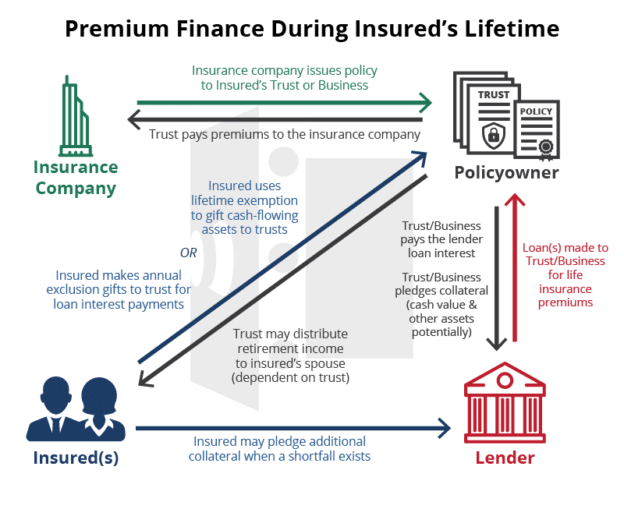
    Premium financing relies on the concept of interest rate arbitrage. A loan enables life insurance owners to keep their money working for them and earning a higher rate of return than the interest rate charged for the loan. Instead of paying life insurance premiums with their own capital, a low cost loan is advantageous. This rate arbitrage must be favorable and appreciated for a successful premium financing arrangement to be suitable and make sense for the borrower.

    The Advantages of Premium Financing are:

    • Low cost method to fund permanent life insurance while offering great flexibility in the future.
    • Using well managed leverage to drive down out of pocket costs.
    • Using life insurance to offset estate taxes.
    • Using low cost loans to fund permanent life insurance with the goal being of having fully funded policies in the later years.
    • To minimize out of pocket costs in early years until the anticipated exit strategies can pay off the loan.

    Successful premium financing is understanding the risks and managing expectations. Working together with insurance companies and lenders ensures successful outcomes. People borrow money to pay for life insurance because they can borrow the annual premiums at a lower rate than what they are earning on their money. This historically reliable arbitrage between loan interest rates and a borrower’s ROI must be present for this to make sense. Later, we will explore this important arbitrage in more detail.

    Premium Financing gives families with illiquid estates the ability to acquire large amounts of needed liquidity at death. By only paying annual interest on the loan, the out of pocket cost is less than paying properly funded permanent policies. Many estate planning attorneys find this financing strategy helpful to accomplish their wealth transfer objectives.

    With short term interest rates near zero percent, life insurance premium financing gets strong consideration among high net worth life insurance buyers. Proceeds from life insurance provides the much needed liquidity that complements succession planning and wealth transfer planning strategies. Financing jumbo life insurance policies is often appealing to HNW people and their advisors because the arbitrage DOES EXIST between actual borrowing cost and the client’s overall ROI. If we look back 50 years, we see that interest rates are lower than insurance company crediting rates, with almost no exceptions. This correlation is the foundation of successful premium financing.

    I have arranged financing for more than 500 families over the course of my career. As a result, I bring valuable expertise and experience that benefits consumers, their advisors, lenders and life insurance companies. For example, it is true that low interest rates are beneficial, if nothing more than causing a lower out of pocket cost. But, financing a life insurance policy should make sense whether interest rates are 3%, 6% or 9%. When borrowing costs increase, the values inside the life insurance policy should also be increasing. That can also lead to less collateral being needed for the loan and less premiums to fund the policy.

    The borrowing rate is only one part of the premium finance story. Historically, insurance companies pay higher interest on policy cash values than borrowers pay for interest on loans. This is the other important rate arbitrage that should exist in properly structured premium finance arrangements.


    Premium Financing Done Right.

    Not free life insurance.

    If premium financing is not “free life insurance”, then what is the true cost of financing a life insurance policy? It is the annual interest expense; that is the true out of pocket “cost” of a premium finance loan. When the loan is paid off, either during lifetime or upon death, that too is part of the cost.

    With rates near 0%, premium financing is a strategy that deserves strong consideration for high net worth individuals, families and business owners who need permanent life insurance coverage. Compared to paying the annual premiums out of pocket, there are advantages to using a competitively priced loan to pay the premiums. 

    A properly structured premium finance arrangement is best suited for people who need and want coverage for life. The cost to borrow the annual premiums should be at least 3% lower than the ROI on their other assets. This creates another arbitrage that justifies premium financing. For example, if the loan interest rate is 4%, then the borrower’s ROI on other assets should be 7% or greater. If it is not, then it may not make sense to finance life insurance.


    Premium Financing Considerations:

    Each premium finance loan is unique and should be stress tested using conservative assumptions. We recommend working with experienced insurance professionals, advisors and experienced lenders who are familiar with this asset class.  

    The majority of the collateral for premium finance loans is typically the cash value within the policy. The reason lenders are willing to make premium finance loans at low interest rates is because cash value is considered to be as creditworthy as cash. Currently, premium finance loans are less than 3%. While interest rates are at historic lows, it can be wise to consider locking in a fixed rate.


    Exit Strategy and The Loan Payoff.

    There must be a sensible exit strategy to pay off the loan. One option is to use cash value from the policy. Another is to use assets already in the trust, such as inheritance monies, liquidity events from sales, etc. When the cash value of the policy is used to pay off the debt, make sure the policy is properly funded to remain inforce for life, after the cash value has been withdrawn or borrowed from the policy. 

    Can Real estate be used as collateral for premium finance loans?

    Lenders typically do not like lending against real estate for these loans because the collateral is not easily available. However, there are some lenders that do work with existing clients to use real estate to support these loans. This tends to complicate something that is already complex. Customers with strong relationships have been known to receive loans from their existing bank.

    Premium Financing and Estate Planning.

    A premium financing arrangement can be beneficial to your overall estate plan. The life insurance policy is typically owned in a trust without gift tax or estate tax consequence. It is not uncommon for $25,000,000+ life insurance policies to be financed and owned in trusts that may be exempt from gift or estate taxation.

    Premium Financing Is Best Suited For:

    1. Clients who need jumbo amounts of permanent death benefit.
      2. Clients who understand leverage & complex financial transactions, or
      3. Clients using life insurance to offset estate taxes.

    Business owners interested in succession planning and key-person protection may also be good candidates for premium finance arrangements:


    Top 7 Premium Finance Considerations: 

    1. Lenders and insurance companies require that these loans are collateralized. The policy’s cash value is typically the majority of the collateral. In the early years, there is typically a small gap which the policy owner is required to satisfy.
    2. The borrowing cost and the policy crediting rates have long been favorably correlated for these types of structures. They historically move in the same direction with the insurance policy crediting rates and dividend scales being higher than the borrowing costs.  
    3. Assuming you feel this strong correlation will continue in the future, financing may be right for you.
    4. A positive rate arbitrage is created when policy crediting rates are greater than loan costs and a cushion is created that can be used when interest rates turn volatile or increase rapidly.
    5. When interest rates rise quickly, there may be temporary rate compression or even rate inversion. Either scenario could increase the annual interest expense until rates stabilize.
    6. The cash value of the life insurance policy ultimately represents 100% of the required collateral for the loan. Gap collateral must be pledged until the cash value is 100% of loan value, typically in less than 10 years.
    7. Properly structured, no personal guarantees are necessary.

    Premium Finance Risks:

    – Decreasing policy interest rates and policy performance risk.
    – Increasing borrowing costs or inability to refinance.
    – Policy lapse risk.
    – Collateral call risk.
    – Income tax risk.


    STOLI RISK: Many premium finance structures have been created or used to take advantage of consumers and insurance companies by purchasing policies owned by strangers. They do this for the sole purpose of re-selling or using them for an illegal profit. We will not participate in STOLI arrangements and we urge people to avoid using life insurance for anything other than long term death benefit. Stranger Owned Life Insurance (STOLI) is not legitimate premium financing and should be avoided. Before proceeding with any premium financing arrangement, you want to fully understand the risks mentioned here and the exit strategies.  


    Inforce Life Insurance Policy Premium Financing:

    • Policy is the only collateral for the full loan balance; no PG.
    • Our capital source is a New York lender experienced in this asset class.
    • 7-year loan maximum.
    • Fees and interest are financed as part of the loan. Little or no out of pocket expense.
    • Competitive interest rate.
    • Life expectancies: 12 years or Less. Sweet spot is 9 years or less.
    • Insureds: 70 and over.
    • Individual Policies: $3-99m face.
    • Portfolios: $35-500m face.
    • Issued Preferred or Standard.
    • Term sheets: Please allow turnaround time of 3-4 working days.
    • International loans not an issue.

    In addition to securing coverage and arranging for the right lenders for each loan, Ted is often hired as an impartial consultant to help life insurance buyers determine which is the best financing solution. These cases often involve jumbo insurance amounts. Working with an experienced consultant on your side that is not selling product can prove to be very valuable.

    You can Email Ted or contact him directly at 561-869-4500.


  • Everyday Tips For Longevity In Retirement.

    Everyday Tips For Longevity In Retirement.

    1. Time passes faster every day. Don’t make it worse by rushing and stressing over time. Where are you going?

    2. Take care of your body so it will take care of you later. Don’t let your world get smaller each day – stay fit and mobile.

    3. Intimacy and friendships remain important regardless of where you are on the life cycle spectrum.

    4. Healthy relationships are the most important thing in your life. Steve Jobs at end of life:

    While the above-quoted essay does not represent either Steve Jobs’ final words nor remarks he made (in either oral or written form) at any time during his life, his biographer Walter Isaacson did record Jobs’ expressing regret at the end of his life about how he raised his children:

    “I wanted my kids to know me,” Mr Isaacson recalled Mr Jobs saying, in a posthumous tribute the biographer wrote for Time magazine. “I wasn’t always there for them, and I wanted them to know why and to understand what I did.”

    “He was very human. He was so much more of a real person than most people know. That’s what made him so great,” he added. “Steve made choices. I asked him if he was glad that he had kids, and he said, ‘It’s 10,000 times better than anything I’ve ever done’.”

    It wasn’t always thus. In the early stages of his career, Jobs, who was adopted, denied being the father of Lisa and insisted in court documents that he was “sterile and infertile”. He acknowledged paternity when she was six, and they were later reconciled.

    5. Money talks. It says “Goodbye.” If you don’t convert assets in the market into guaranteed lifetime income, you’ll wish you had. And then it’s too late.

    acceptance

    6. Many of the seeds you planted in the past, some good and some bad, will begin to bear fruit and affect the quality of your life as you get older.

    7. Acceptance is grace, freedom and peacefulness.

    8. Don’t let your possessions own you. Consider them on the trouble vs. enjoyment scale. Simple but enlightening.

    9. You may regret some things you didn’t do far more than the ones you did that were “wrong”.  If you get the chance — do them. You may not get the chance again.

    10. Every day you wake up is a gift.

    11. Converting retirement assets – stocks, bonds, CDs and Treasury’s – into a Longevity Annuity will eliminate risk, guarantee income for life, allow you to enjoy retirement and sleep at night. Do you want to receive guaranteed monthly income, paid to you no matter what? Or, do you want to be responsible to mange a complex investment portfolio into your 80’s and 90’s? Talk to friends and others who receive large amounts of guaranteed, lifetime income and ask them for their opinion about this critical issue.

    If guaranteed lifetime income is a primary retirement goal for you, please contact me to arrange a no obligation discussion about my views concerning retirement security. There are dozens of threats to your nest egg in retirement and I will explain the power of guaranteed income contracts and why you will never learn about these strategies from traditional money managers. You can email me or call me directly at 561-869-4500.


  • 2016 Election and Your Retirement

    2016 Election and Your Retirement

    The 2016 Elections are over, and now you should learn on how this will affect your retirement.  Here are a few resources to help clarify the change of landscape:

    What a Trump Administration Means for Your Retirement

    What impact will a Trump presidency have on the 46 million Baby Boomers living in the U.S.?  President-elect Trump, a Baby Boomer himself, has his work cut out for him when it comes to dealing with Social Security and Medicare.  READ MORE

    Why The Roth IRA May Be Big Winner In 2016 Presidential Election

    With the 2016 presidential election behind us, we can all start thinking about what this country will look like under President Donald Trump.  Notwithstanding all the pre-election campaign rhetoric about immigration, foreign policy, etc., one thing we are quite certain about is that President-Elect Trump is serious about reducing personal income and corporate tax rates across the board. READ MORE

    The Real Lessons the Presidential Election Holds for Your Retirement Strategy

    Since last week’s presidential election, we’ve seen a deluge of investing and retirement advice. Some is perfectly reasonable: Don’t make any radical moves in your 401(k)! But some recommendations, such as putative ways to “Trump-proof your portfolio,” are in my opinion questionable to say the least. READ MORE

    If you would like to take that first step, please drop me an email, or give me a call.  I am Ted Bernstein, and I will answer any questions that you might have. No stress, no pressure, just a simple first step in the process.

    Please call me at 561-869-4500 or email me at tb@lifecycleplanners.com

  • 3 Simple Retirement Questions To Ask Yourself.

    3 Simple Retirement Questions To Ask Yourself.

    Lower Your Stress About Retirement

    These 3 Simple Questions About Your Retirement Will :

    1. Do you have any plan at all about retirement besides social security and/or a pension?

    Over half of all Americans have never made any retirement plan whatsoever, and another 23% have never done any sort of calculation on how much they will need to retire. Doing nothing is not a plan, and it is not as difficult as you might think. You don’t have to stress about calculating perfectly for how much you will need, but you just simply need to start. Remember: The earlier you start planning and doing something about your retirement, the more painless it is.

    2. Have you done any thinking or estimates on how you will handle health care costs after retirement?

    Over 3/4 of Americans have to take from their retirement savings and income to pay for unexpected health care costs during retirement. The trick here: prepare for the unexpected.  By simply knowing a few things on how to fill the gaps of your health care coverage after retirement, you won’t need to worry about raiding your retirement savings.

    3. Be Honest, Did You Assume You Will Work Steadily Until Retirement?

    Over 55% of Americans in a recent poll stated that they plan to work until they are 70 or over and are planning accordingly. However, almost 80% of Americans retire before the age of 64. There is a major disconnect that we have about how and when we actually retire.

    So, you answered these questions and are now thinking, “What am I going to do about retirement?” -or- you move on with your day and figure you will deal with it some other time.  That is understandable, it is not fun.  But it is just like preparing for a test.  As long as you haven’t studied, there will be stress.  Once you have done the studying, the stress goes away.

    And you don’t have to solve all of your retirement problems in one meeting with a professional.  Just dip your toe in the water, and start by simply learning about some options.

    If you would like to take that first step, please drop me an email, or give me a call.  I am Ted Bernstein, and I will answer any questions that you might have. No stress, no pressure, just a simple first step in the process.

    Please call me at 561-869-4500 or email me at tb@lifecycleplanners.com

  • Beware of Bad Financial Advice.